Our work speaks for itself.
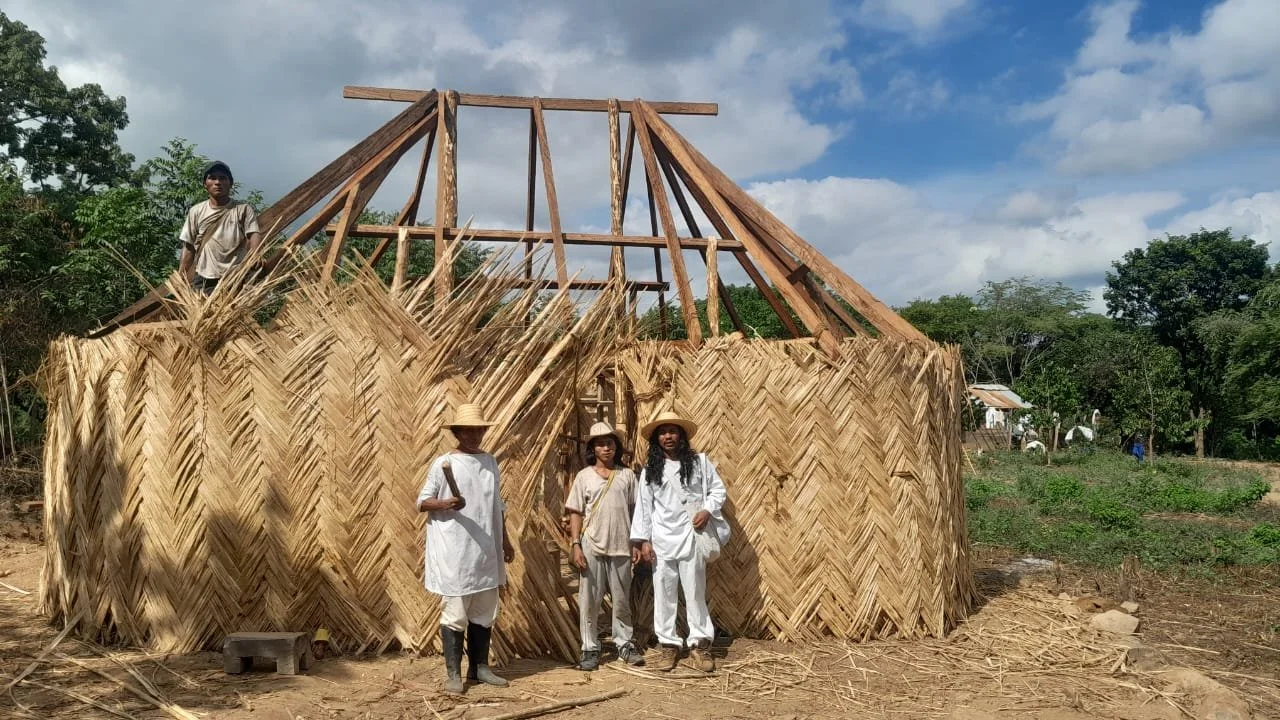
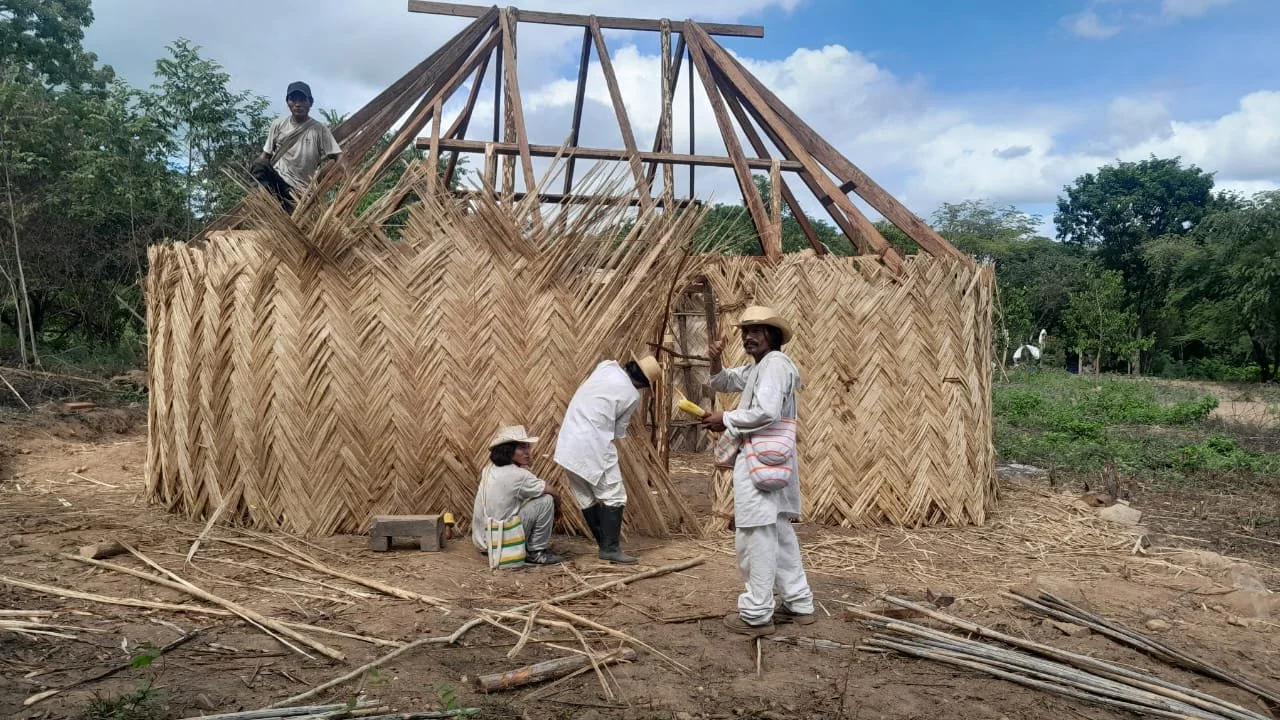
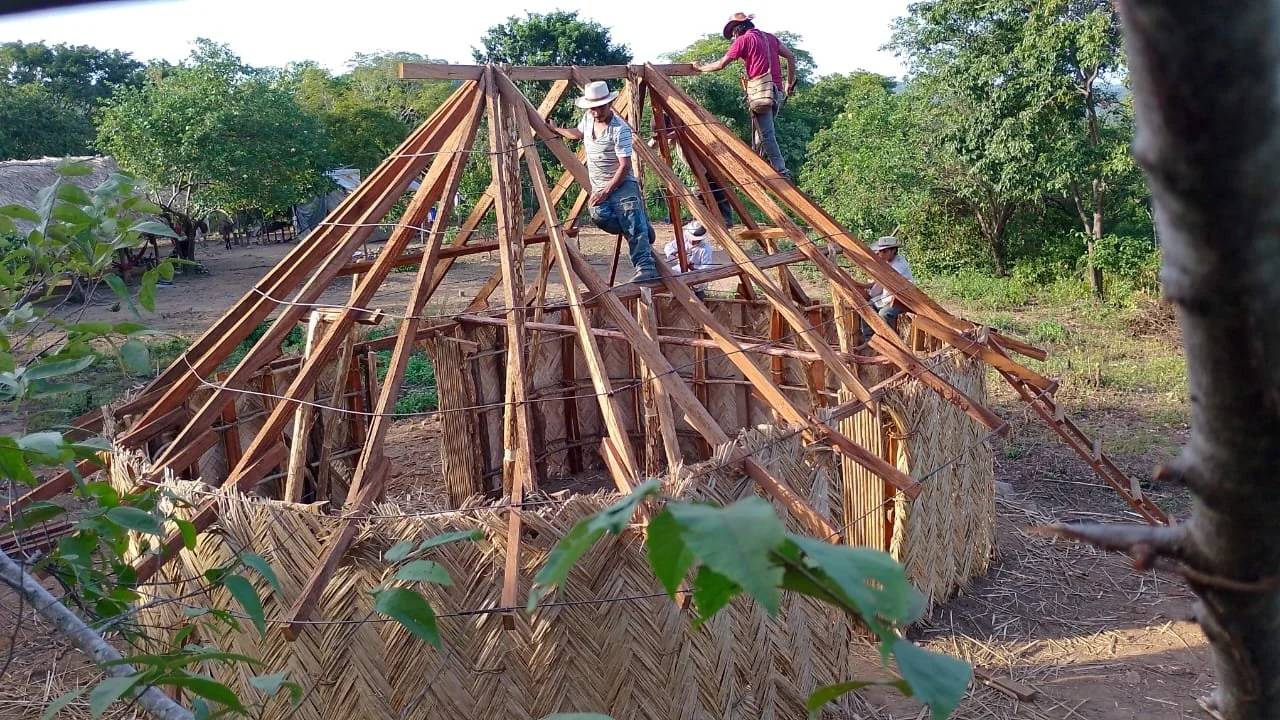
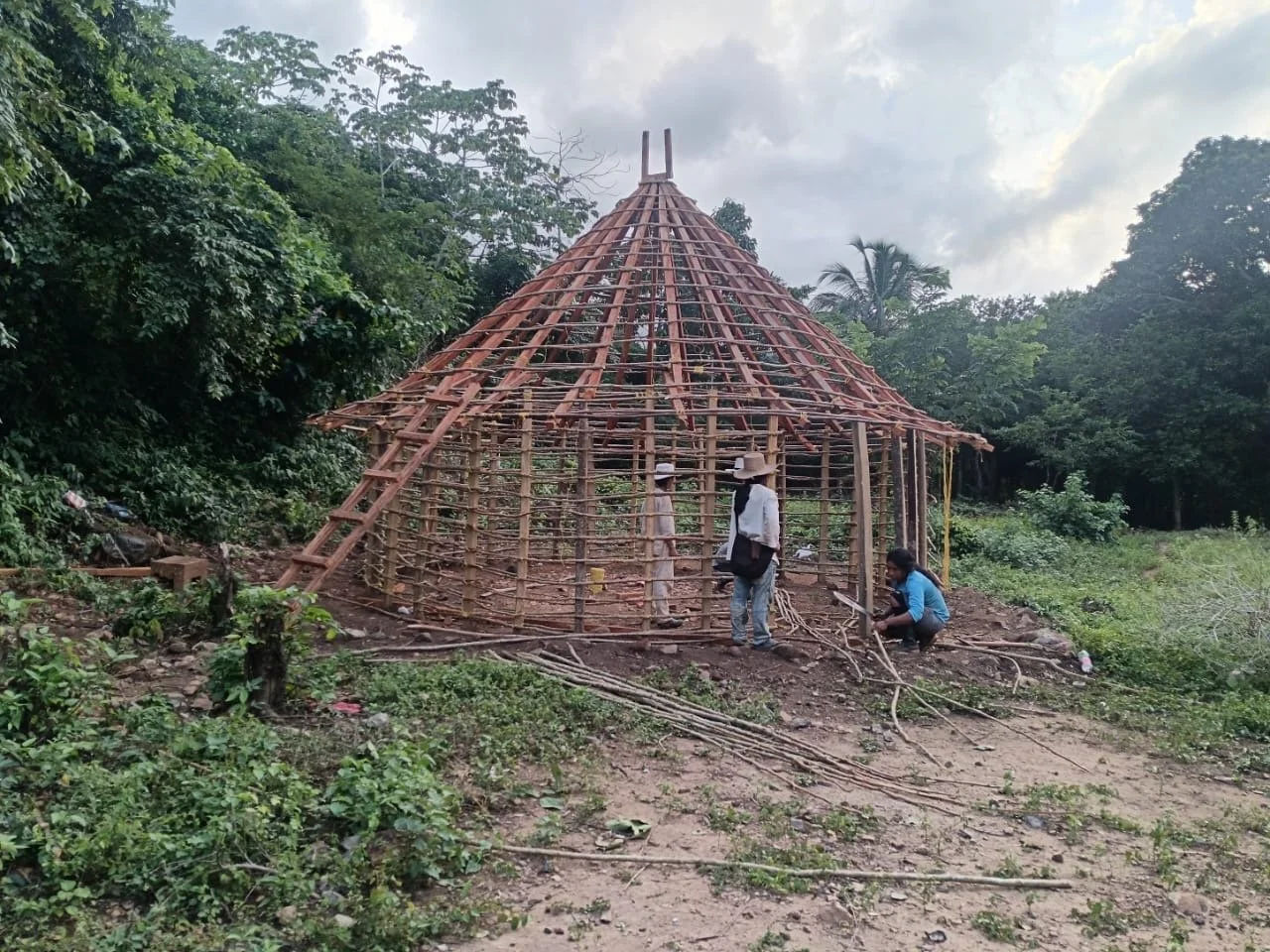
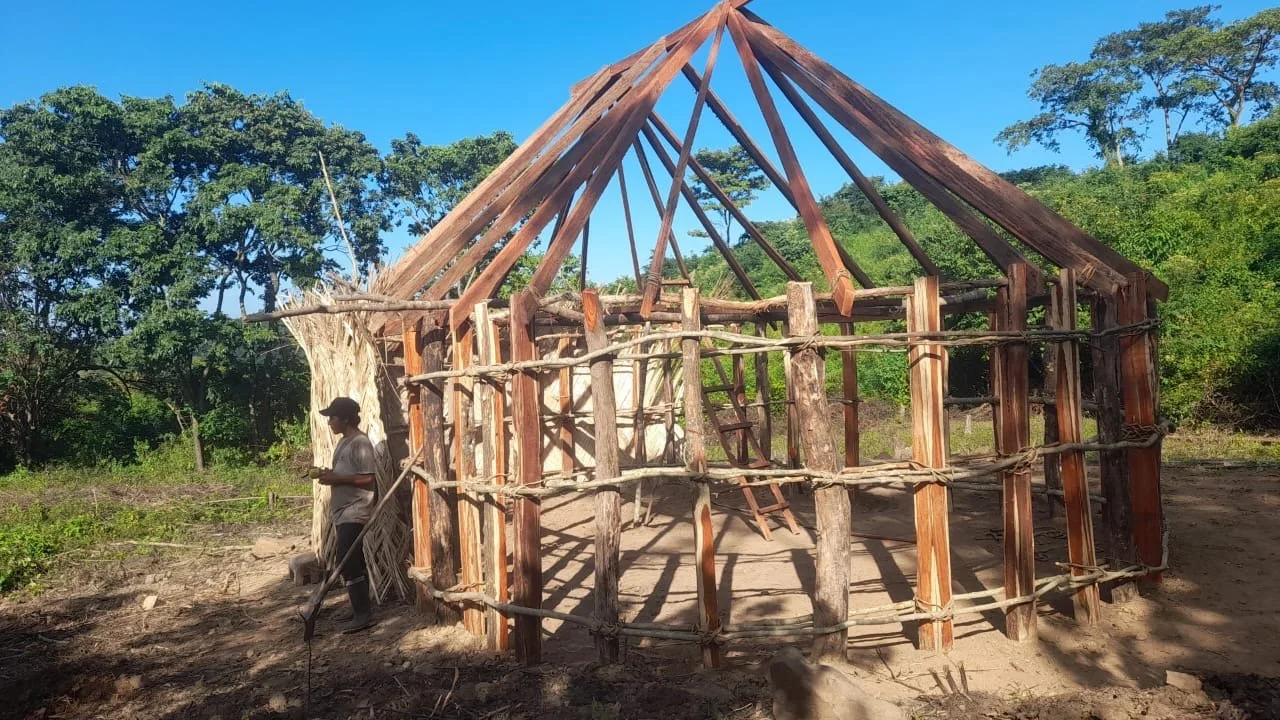
Through direct collaboration with spiritual elders and traditional authorities, we initiated the creation of Sacred Temples in two Wiwa communities of the Sierra Nevada de Santa Marta. This community-led project emphasizes the importance of safeguarding ancestral spaces and maintaining cultural traditions essential to spiritual continuity and collective well-being.

TRADITIONAL CONSTRUCTION OF UNGUMAS AND USHUIS FOR THE SPIRITUAL, CULTURAL, AND ORGANIZATIONAL STRENGTHENING OF THE WIWA PEOPLE IN THE COMMUNITY OF SEYUMAKE ARIMAKA AND KESHEAMKE
The community of Seyumake Arimaka and Kesheamke currently face a critical need for their own sacred spaces to strengthen spirituality, culture, and internal organization. The traditional construction of an Unguma (ceremonial house for men) and a Ushui (ceremonial house for women) is not merely the creation of physical structures, but an act of restoring spiritual balance and reaffirming Wiwa cultural identity in the face of ongoing threats to their traditional way of life.
At present, Seyumake Arimaka and Kesheamke lack appropriate spaces for carrying out traditional practices. The absence of an Unguma and an Ushui has limited the performance of rituals, pagamentos (spiritual offerings), and sacred gatherings essential for maintaining harmony between the community and the territory. This absence has also weakened the transmission of ancestral knowledge and spiritual education to younger generations.
The construction of these ceremonial houses is therefore an urgent necessity for strengthening the Wiwa system of self-governance and spiritual balance. These spaces will allow mamos and traditional authorities to guide community processes from a sacred and legitimate container. They will serve as centers for spiritual education, ancestral counsel, dream interpretation, teachings of the Tayrona cosmovision, and territorial harmonization.
More than building structures, this project seeks to restore balance between human beings and nature, ensuring that the community’s thoughts, words, and actions return to harmony with the heart of the territory. The Unguma and Ushui for Seyumake Arimaka and Kesheamke will become symbols of cultural resistance, spaces for healing and guidance, and living testimonies of the Wiwa people’s commitment to preserving their ancestral legacy and building a peaceful, sustainable future in balance with Mother Earth.
Armed conflict in the Sierra Nevada de Santa Marta has significantly impacted the Wiwa communities, causing displacement and the destruction of homes and ceremonial centers through violence and fire. This has led to the loss of essential cultural, social, and spiritual assets, deeply affecting traditional governance and collective decision-making.
In particular, the Indigenous community of Arimaka, located within the Kogui–Malayo–Arhuaco Indigenous Reserve, has suffered the loss of its Unguma, Ushui, and other ceremonial spaces as a result of armed conflict, leaving a profound void in its ceremonial life, social cohesion, and traditional governance. Within the same Indigenous Reserve, the community of Kesheamke has emerged as a new collective initiative formed through displacement caused by violence. As a community in the process of rebuilding, Kesheamke is seeking safety, reconnection with the territory, and the restoration of spiritual and communal life. For Kesheamke, the construction of an Unguma and an Ushui represents the creation of their first ceremonial temples—foundational spaces essential for healing, reestablishing identity, and grounding their future in harmony with nature.
Together, the experiences of Arimaka and Kesheamke reflect both the loss and the rebirth of sacred spaces, emphasizing the vital role that ceremonial temples hold in restoring balance, strengthening community, and ensuring the continuity of Wiwa spiritual and cultural life.
What We Will Do
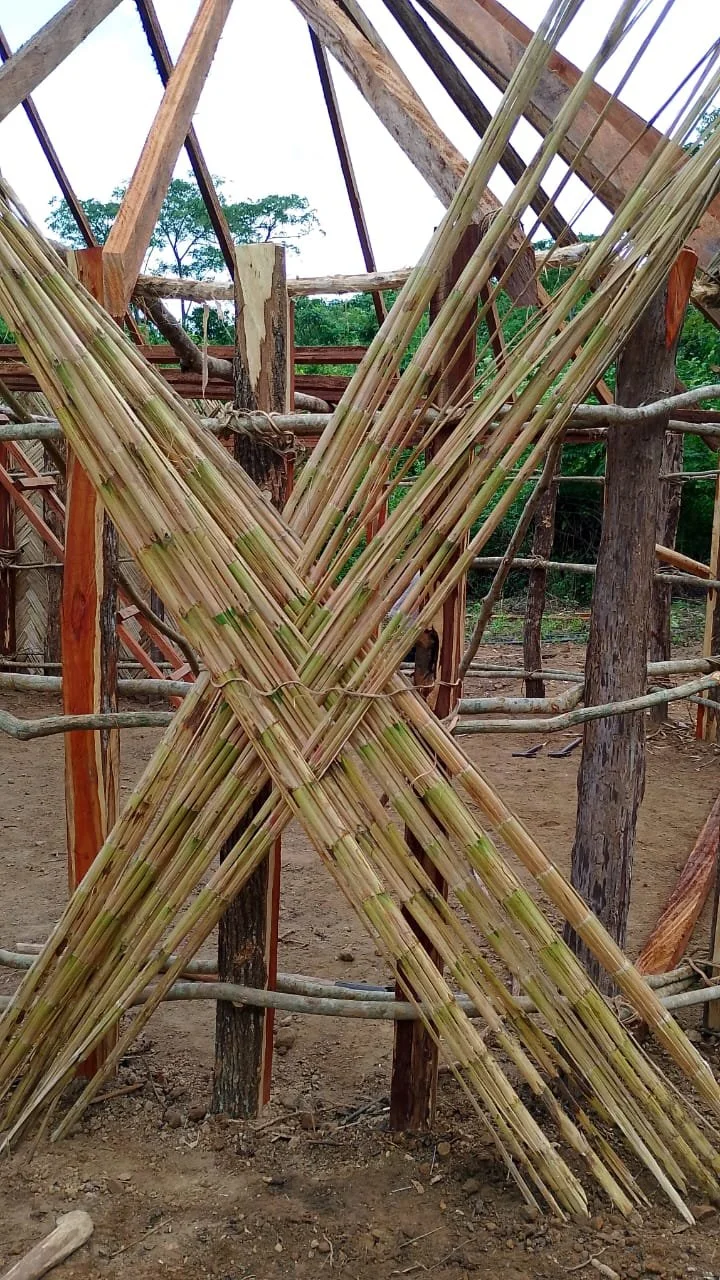
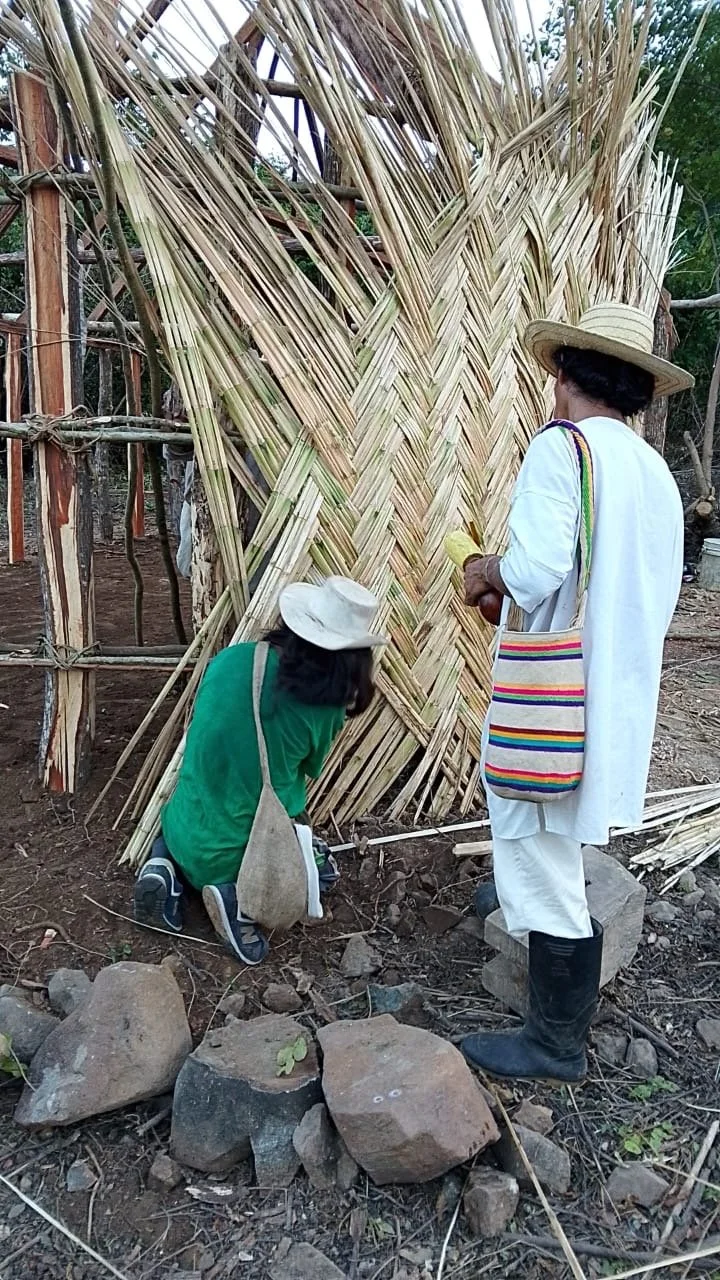
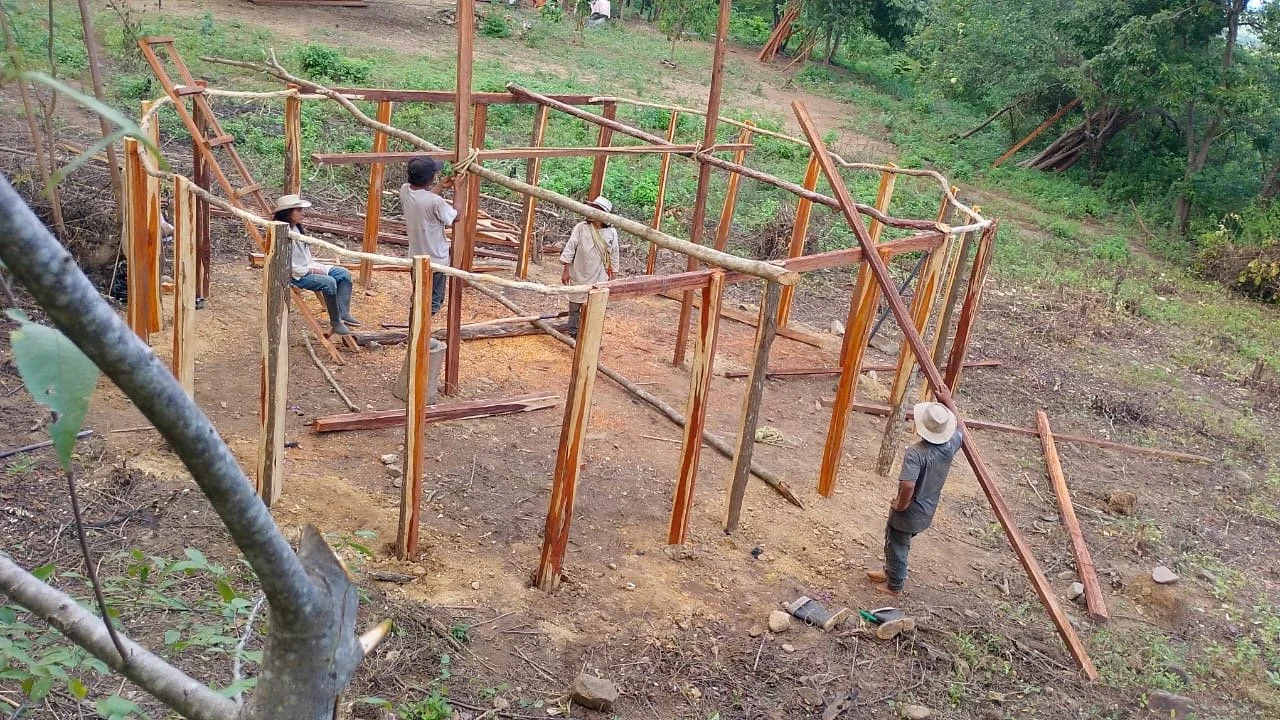
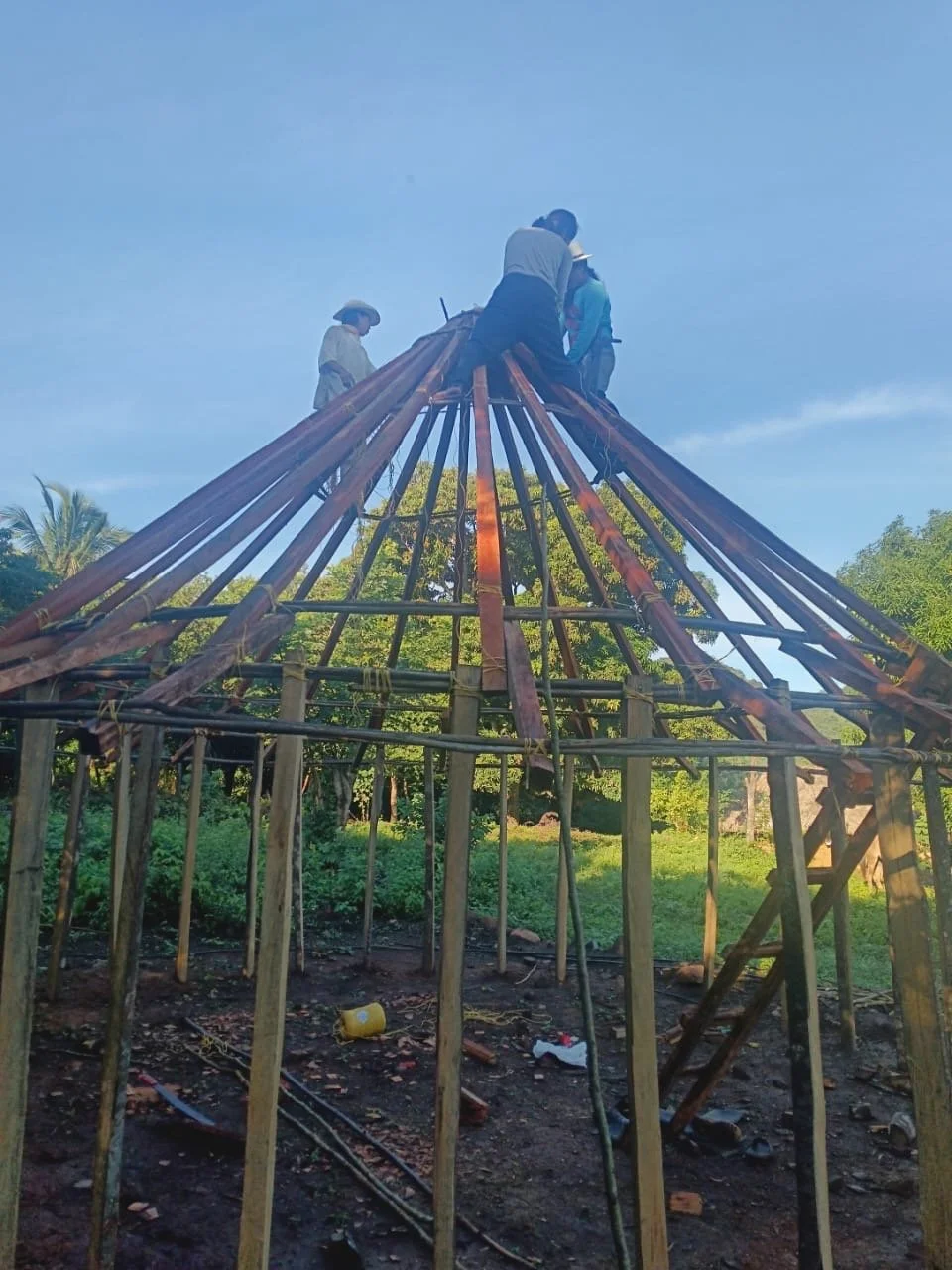
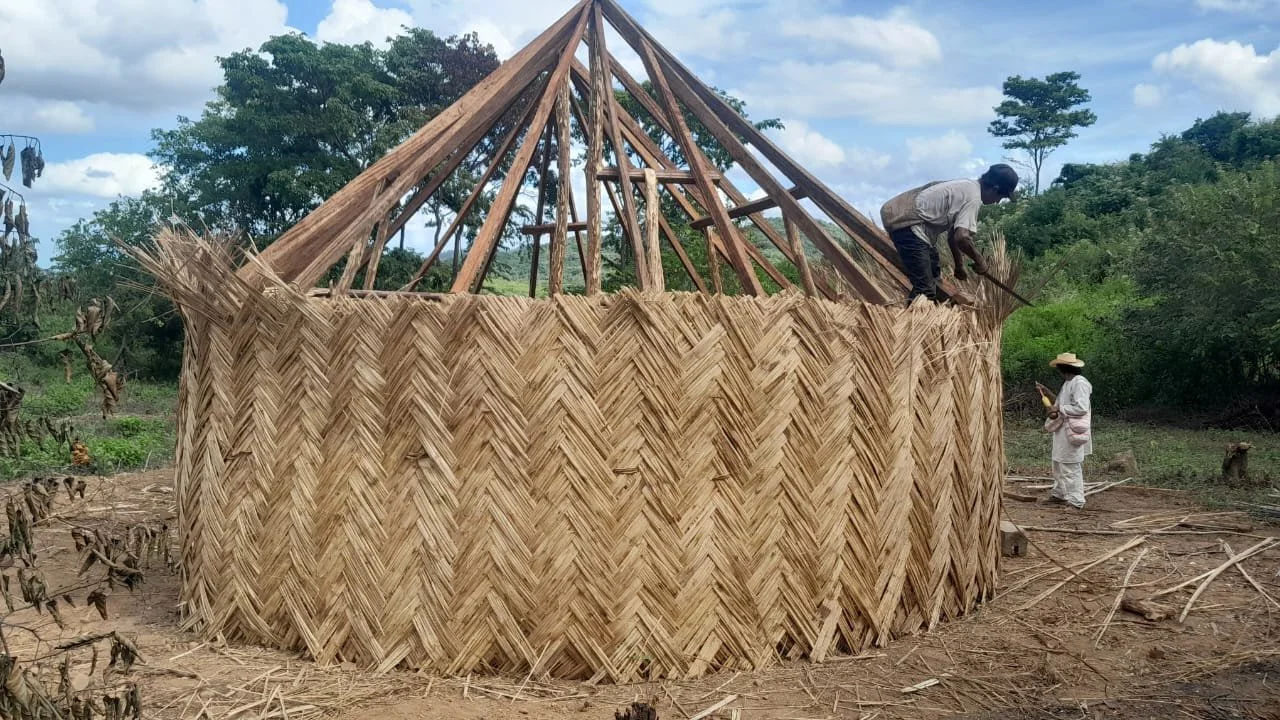
The project will traditionally construct an Unguma and a Ushui in the Indigenous community of Seyumake Arimaka and Kesheamke, in the department of La Guajira, under the spiritual guidance of the mamos and with the active participation of the entire community. The ceremonial houses will be built using natural materials from the territory, gathered respectfully, and ancestral construction techniques that ensure harmony between the physical space, the natural environment, and Wiwa spirituality. The process will follow the principles of the Tayrona cosmovision, lunar cycles, and the required ceremonies of authorization and pagamento that guide all sacred works.
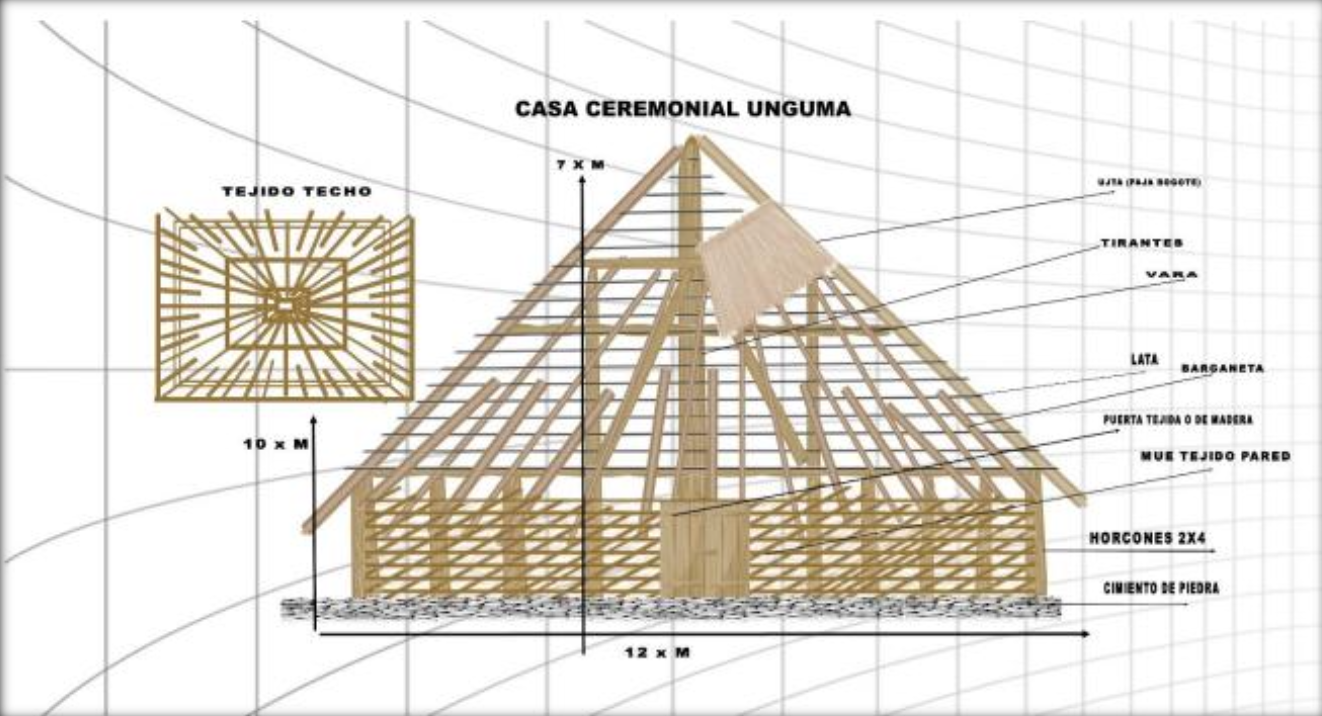
This context highlights the urgent need to restore traditional spaces of governance and coexistence, strengthen Indigenous autonomy, and ensure the full exercise of cultural and political rights in accordance with Wiwa cosmovision, traditions, and life plans.

These ceremonial houses were central to governance, conflict resolution, and spiritual harmonization, as well as to maintaining the connection with the land and the ancestors. Their destruction represents not only material loss but a deep rupture in cultural identity, values of coexistence, and respect that define the Wiwa people. Geographic isolation and limited institutional response have further increased vulnerability, restricting access to resources, emergency response, and support.
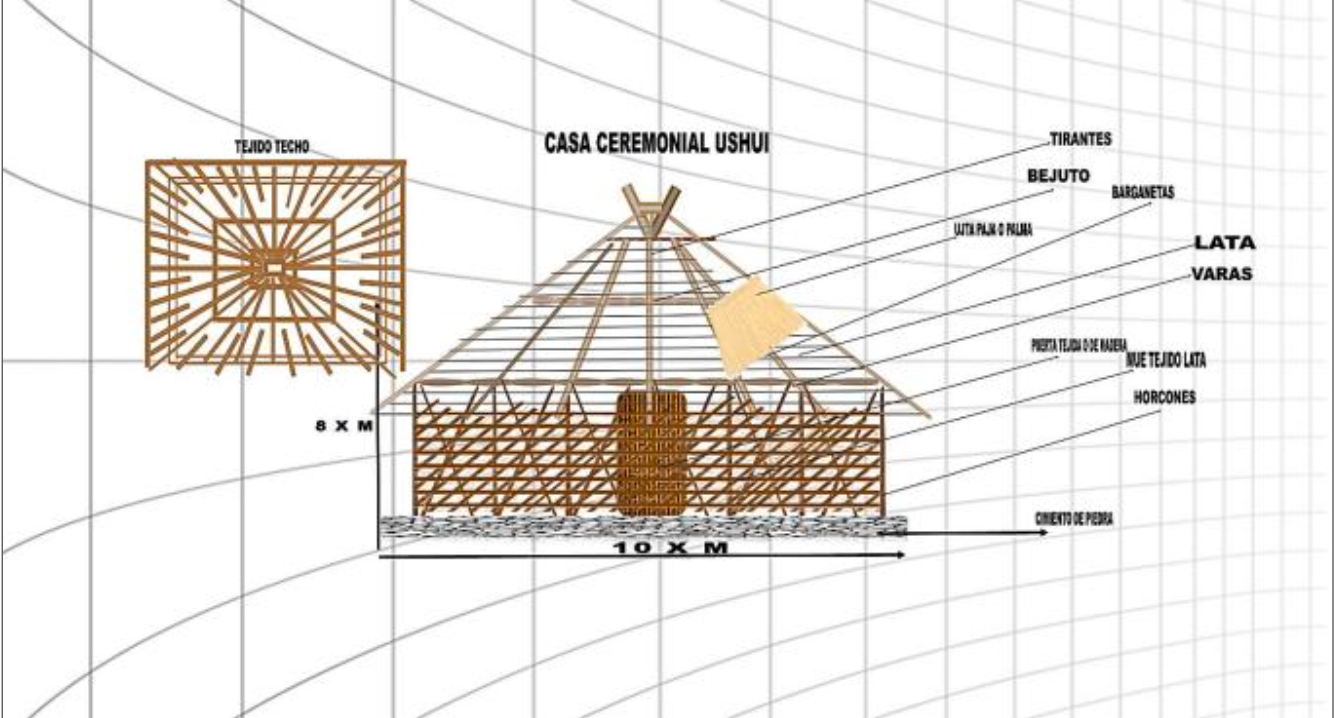
This shared effort demonstrates the high level of participation, autonomy, and sense of belonging of the Wiwa people, reaffirming that this process is not about charitable assistance, but rather a partnership for cultural and spiritual strengthening.
The joint work between the community and allied institutions will ensure that the Ungumas and the Ushuis are built in a harmonious, legitimate, and sustainable manner, reflecting the principle of reciprocity that characterizes the Wiwa people:
Everything that is co-created with Mother Earth is in balance and well-being for all beings.